PESQUISAR ESTE BLOG

Mostrando postagens com marcador Geographers. Mostrar todas as postagens

Aziz Ab'Sáber

Aziz Nacib Ab'Sáber; (October 24, 1924 – March 16, 2012) was a geographer and one of Brazil's most respected scientists, honored with the highest awards of Brazilian science in geography, geology, ecology and archaeology. Graduated in geography, he was a president and honorary president of the Sociedade Brasileira para o Progresso da Ciência (Brazilian Society for the Advancement of Science), Emeritus Professor of the University of São Paulo and member of the highest rank - Order Grão-Cruz in Earth Sciences - of the Academy of Science. Among the awards, he has received the UNESCO Prize on Science and the Environment in 2001 and the Prize to the Intellectual of Brazil in 2011.

Aziz Ab'Sáber.

The contributions of Ab'Saber to science range from the first research of oil camps in Brazil's northeast to surveys of Brazil's natural realms and the restoration of the history of forests, camps and primitive humans over geologic time in South America. He made central contributions to biology, South American archaeology, and to Brazilian ecology, geology and geography. He has published more than 480 works, most of them scientific publications. Among his scientific proposals are FLORAM, the Code of biodiversity and his theory of refuges related to the Amazones.

Ab'Sáber was the first person to classify scientifically the Brazilian and South-America territory in morphoclimatic domains. He also contributed to the "Pleistocene refuge hypothesis", an attempt to explain the distribution of Neotropical taxa as a function of their isolation in forest fragments during glacial periods, which allowed populations to speciate. He died in 2012 following a heart attack.

Selected publications
Ab'Saber, A.N. 2010, A Obra de Aziz Nacib Ab'Saber San Pablo, BECA,2010; 558 pp
Ab'Sáber, A. N. 1982. The paleoclimate and paleoecology of Brazilian Amazonia. In Biological Diversification in the Tropics. New York:Columbia University Press. p. 41-59.
Ab'Sáber, A. N. 1983. O domínio dos cerrados: introdução ao conhecimento. Revista Servidor Público. vol. 40, p. 41-55.
Ab'Sáber, A. N. 1986. Geomorfologia da região Corridor Carajás-São Luiz. In Carajás. Desafio Político, Ecologia e Desenvolvimento. São Paulo:CNPq. p. 88-123.
Ab'Sáber, A. N. 1989. Zoneamento ecológico e econômico da Amazônia: questão de escala e método. Revista Estudos Avançados. vol. 5, p. 4-20.
Ab'Sáber, A. N. 1990. Um plano differencial para o Brasil, Projeto Floram. Revista Estudos Avançados. vol. 5, p. 19-62.
Ab'Sáber, A. N. 1990. FLORAM: Nordeste Seco. Revista Estudos Avançados. vol. 4, p. 149-174.
Ab`Saber, A. N. Ecossistemas do Brasil. Metalivros, 2006.

Tania López Marrero

Tania del Mar López Marrero is a Puerto Rican scientist. She is an associate professor in the department of social sciences at the University of Puerto Rico at Mayagüez.


Education
In 1997, López completed a B.Sc. in environmental science in the College of Natural Sciences at University of Puerto Rico, Río Piedras Campus (UPR-RP). Her undergraduate thesis was titled The Effect of Land Use on Soil Erosion in the Guadiana Watershed in Puerto Rico. She was a laboratory technician at UPR-RP in 1997. In 1998, she was a GIS intern at La Selva Biological Station. From 1998 to 2000, López was a GIS and Cartographic technician at the International Institute of Tropical Forestry where she later became a GIS analyst in 2001. In 2002, she earned a M.Sc. in geography with a focus on human-environment relationships at Penn State College of Earth and Mineral Sciences (PSU). Her master's thesis was titled Characterization and Modeling of Land-Cover Change: The Case of Urban Expansion in a Caribbean Landscape. From 2002 to 2004, López was an instructor in the department of geography at UPR-RP. In 2008, López completed a Ph.D. in geography with an emphasis on human-environment relationships and cartography from PSU. Her dissertation was titled Adaptive Capacity and Resilience to Floods in the Caribbean: A Case Study from Flood-Prone Communities in Puerto Rico. Her advisors were Brent Yarnal and Petra Tschakert.

Career
From 2008 to 2010, López was an assistant researcher at the Institute of Caribbean Studies at UPR-RP. In 2010, she joined the departments of geography and Latino and Hispanic Caribbean studies at Rutgers University as a visiting researcher before working as an assistant professor from 2011 to 2014. In 2014, López became an assistant professor in the department of social sciences and director of the interdisciplinary center for coastal studies at the UPRM College of Arts and Sciences. From 2015 to 2016, López was the associate director of the National Sea Grant College Program at UPRM. In 2018, she became an associate professor at UPRM.

Research
López researches natural hazards and disasters, ecosystem change and services, land use, mixed methods, techniques in participatory research, geographic information systems, and cartography. She also researches human-environment interactions, natural adaptive capacity, and community resilience. She is the principal investigator (PI) for a number of projects. From 2008 to 2010, López was the PI for the project, Integrating Landscape Attributes, Ecosystem Services, and Stakeholder Perceptions and Incentives for Determining Land Use Suitability for Conservation in collaboration with University of Puerto Rico and the International Institute of Tropical Forestry. From 2009 to 2011, López was the PI for the project, Public Knowledge and Perception of Forest Ecosystems Services and Drivers of Ecosystem Change: the Case of the Northern Karst and the Río Piedras Watershed, Puerto Rico which was conducted in collaboration with UPR, USDA, and United States Forest Service Urban and Community Forestry, and Misión Industrial de Puerto Rico. In 2012, she received a Rutgers Council grant for the project, Re-mapping the Insular Caribbean: Visualizing and interpreting environmental data through cartograms. Through the Critical Caribbean Studies initiative at Rutgers University, López researched the urban expansion and natural hazards in Puerto Rico from 2012 to 2013. In 2013, she led the Rutgers University Caribbean Environmental Mapping Initiative. López was the project director of the Promoting Community Adaptation and Resilience in the Insular Caribbean (PROCARIB Working Group) at Rutgers University from 2012 to 2014.

Awards and honors
In 2005, López won a Sloan Research Fellowship for underrepresented minority students earning doctorates in mathematics, science, and engineering.

Yan Liu (geographer)

Yan Liu is an Australian geographer known for her use of cellular automata and particle systems to model patterns of urban development. Her work has also involved using electronic transit pass data to compare the transportation patterns of residents of Australian and Chinese cities.

Professor Yan Liu

Liu has a Ph.D. from the University of Queensland, and an associate professor of human geography and deputy head of school in the University of Queensland School of Earth and Environmental Sciences. She is the author of the book Modelling urban development with geographical information systems and cellular automata (CRC Press, 2009).

Ana Fani Alessandri Carlos

Ana Fani Alessandri Carlos is a Brazilian geographer. She is a full professor at the Department of Geography at the University of São Paulo and coordinator of the São Paulo Study Group. Carlos focuses her research on the São Paulo metropolitan area and the spatial transformations which resulted from the area's development.

Ana Fani Alessandri Carlos.
Published books (in Portuguese)
  • Espaço e indústria. São Paulo: Editora Contexto/Edusp, 1ª edição 1992, 4a edição 1992., 5 edição 1995, 7ª edição 1997, 70 p.
  • Os Caminhos da Reflexão Sobre a Cidade e o Urbano. Edusp, 1994, 391 p.[3]
  • A cidade, São Paulo: Editora Contexto, 1ª edição 1991, 2ª edição 1995. (Coleção Repensando a Geografia), 98 p.
  • A (re)produção do espaço urbano. São Paulo: Editora da Universidade de São Paulo, 1994, 270 p.
  • O lugar no/do mundo. São Paulo: Hucitec, 1996, 150 p. segunda edição no prelo
  • Espaço - tempo na metrópole Editora Contexto, São Paulo, 2001 368 páginas.
  • Geografias de São Paulo. Editora Contexto Ana Fani Alessandri Carlos e Ariovaldo Umbelino de Oliveira, 2004, 828 p

Thelma Glass

Thelma Glass (May 16, 1916 – July 24, 2012) was an American civil rights activist, noted for helping to organize the Montgomery bus boycott of 1955, and a professor of geography.

Thelma Glass.
Biography
Glass was born Thelma McWilliams in Mobile, Alabama, to a hotel cook and homemaker. She graduated from Dunbar High School (Mobile) and attended Alabama State University and Columbia University.

In 1955, after Rosa Parks' arrest, Glass and the other members of the Women's Political Council, called for a boycott of the Montgomery bus system, thus beginning the Montgomery bus boycott, a key action in the Civil Rights Movement. Glass had joined the organization in 1947 and in 1955 was its secretary. The Rev. Dr. Martin Luther King Jr. joined in the protests as well and worked with her. She passed out fliers, alerted the community, and urged passengers to walk or car-pool. Soon she noticed every bus that went by was empty of passengers. Although there was sometimes violent retaliation, the boycott continued and eventually the Supreme Court ruled that segregation on buses was unconstitutional and the boycott ended.

She married Arthur Glass in 1942, and both taught geography at Alabama State University, where her husband was also a professor. Glass died in 2012 at the age of 96.

Bertha Becker

Bertha Koiffmann Becker (November 7, 1930 – July 13, 2013) was a Brazilian geographer, author and professor emeritus at the Federal University of Rio de Janeiro. She published more than 180 books, articles, and other works during her career. Much of her research dealt with issues affecting the Amazon rainforest and surrounding regions, as well as the political geography of Brazil. She helped develop new public policies for the Brazilian Ministry of Science and Technology. She spoke as a panelist at the United Nations Conference on Sustainable Development Rio+20 in 2012.

Bertha Becker.

Born in Rio de Janeiro, Becker received her degrees from the University of Brazil in 1952 in geography and history. In 1970, she completed her doctorate at the Federal University of Rio de Janeiro, where she became a longtime faculty member. She also completed her post-doctoral studies in urban studies and planning at the Massachusetts Institute of Technology in the United States.

Becker served as the Vice President of the International Geographical Union from 1996 to 2000 and the Vice President of the International Advisory Group of the Pilot for the Protection of Tropical Forests from 1995 to 2005.[1] She was awarded the David Livingstone Centenary Medal from the American Geographical Society, an honorary doctorate from the University of Lyon, and the Carlos Chagas Filho Scientific Merit award. In 2006, she had been elected a member of the Brazilian Academy of Sciences.

Bertha Becker died in Rio de Janeiro on July 13, 2013, at the age of 82.

Natalia Zubarevich

Natalya Vasilyevna Zubarevich (Russian: Наталья Васильевна Зубаревич, born 7 June 1954, Moscow) is a Russian economist-geographer specializing on the socio-economic development of the regions. She has been the professor of the Department of Economic And Social Geography of Russia of the Moscow State University since 2005.

Natalia Vasilyevna Zubarevich
Наталья Васильевна Зубаревич
Biography
In 1976 Zubarevich graduated from the MSU Faculty of Geography. Since 1977 she has been working at the Department of Economic And Social Geography of Russia, Geography Faculty of Moscow State University. She became the associate professor in 1998 and full professor in 2005. In 2003 she defended her doctoral dissertation on the topic "Social development of Russian regions in the transition period".

Since 2003 Zubarevich has been combining teaching with the work of the director of the regional program of the Independent Institute of Social Policy. The Social Atlas of Russian Regions program helps researchers, investors, politicians, teachers and students. With its help, you can see the severity of existing problems in the regions, assess human capital and social infrastructure, get acquainted with modern trends in regional development.

In 2010 she became the full member of the Association of Russian Geographers and Social Scientists and the member of the Expert Council of the Association.

Zubarevich constantly participates as a leader and responsible executor in the programs of the Ministry of Economic Development and the Ministry of Labour and Social Protection, as well as in international projects and programs, including projects of the United Nations Development Programme (Annual Reports on Human Development in the Russian Federation), the Moscow Bureau of the International Labor Organization ("Poverty Reduction Strategy in Russia"), TACIS Programs ("Reforming the social protection system in the Russian Federation" and "Monitoring regional reforms in the Russian Federation"), the World Bank Social Projects Fund ("Development of a methodology for forming a model for the development of social infrastructure in the region"), etc.

Zubarevich also lectures at universities and public bodies of Kazakhstan, Kyrgyzstan, Azerbaijan, Ukraine, the Netherlands, and Germany at the invitation of international organizations.

In September 2020, Zubarevich supported the Belarusian protests.

The theory of the Four Russias
Professor Zubarevich is the author of the "theory of the four Russias",[3] developed by her from the center-peripheral model of space development (center and periphery) that has existed in economic geography since the 1970s. Russia, in socio-economic terms, is internally heterogeneous, divided into relatively developed cities and a backward province.

  • Russia-1 includes Moscow and the million-plus cities, where 21% of the Russian population lives. 12 cities of the country are mainly post-industrial society (with the exception of Omsk, Perm, Chelyabinsk, Volgograd and Ufa), they concentrate the middle class of Russia. The main internal migration is directed to these cities: millionaires attract the population of their regions, while Moscow attracts people from the whole country. This category may include cities with a population of over 500 thousand or over 250 thousand inhabitants (which is about 36% of the country's population). These people have access to jobs, markets, culture and the Internet.
  • Russia-2 includes industrial cities, single—industry towns, with a population of 20 to 250 thousand inhabitants (as well as larger industrial cities such as Togliatti, Cherepovets, etc.). The population of these cities, which makes up 25% of the country's population, is employed mainly in industry, is poorly educated and continues to lead, according to the author, a "Soviet lifestyle". The solvency of the population is low.
  • Russia-3 includes the Russian hinterland like small towns and villages, where 38% of the total population of the country lives. In these localities, the population is shrinking and aging.
  • Russia-4 includes the republics of the North Caucasus and southern Siberia (Tyva, Altai) that account for less than 6% of the country's population. The economy of these regions depends on the support of the federal center.

Nigel Clifford

Nigel Richard Clifford (born June 1959) is the President of the Royal Geographical Society, the Deputy Chair of the UK's Geospatial Commission, and Operating Executive for Marlin Equity Partners. He formerly held several chief executive and senior positions, mainly in technology companies. He has also been chief executive of Great Britain's Ordnance Survey and Glasgow Royal Infirmary NHS Trust.

Nigel Richard Clifford.

Early life 
Nigel Clifford was born in June 1959. He has a degree from Downing College, Cambridge in Geography and an MBA from the University of Strathclyde.

Career
He worked for British Telecom in a variety of roles from 1981 to 1992. He was chief executive of Glasgow Royal Infirmary NHS Trust from 1992 to 1998. From 1998 to 2000 he was service delivery director at Cable & Wireless plc. He was chief executive of Tertio from 2000 to 2005.

From 2005 to 2008 he was chief executive of Symbian Ltd. (a joint venture of handset vendors) which was eventually sold and integrated into Nokia in 2008. He was technology director at Nokia from 2008 to 2010 and chief executive of Micro Focus International from 2010 to 2011.[4] He was CEO of Procserve, a cloud based e-commerce network, from 2012 to 2015.

He has held non-executive director positions at Anite, and Alliance Pharma.

He was chief executive officer of Ordnance Survey, a British government-owned mapping business, from June 2015 for three years.

He is currently President of the Royal Geographical Society.

Personal life 
He is married and has three adult children. His personal interests include fell-walking, running, and kayaking.

Mikhail Ivanovich Venyukov

Mikhail Venyukov (June 23, 1832 – July 16, 1901) was a Russian geographer and Major General.
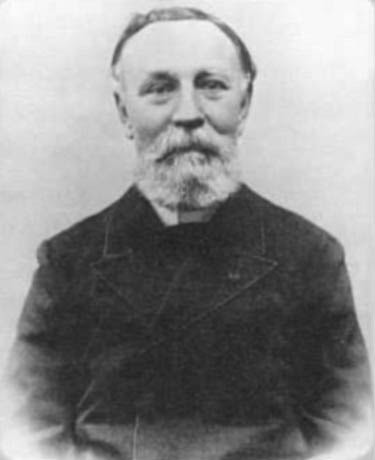
Mikhail Ivanovich Venyukov.
Biography
Mikhail Venyukov was born in the village of Nikitino Pronsky district of Ryazan province (now Korablin district of the Ryazan region). At the age of thirteen, he was accepted into the Cadet Corps; in 1850 he graduated with the rank of artillery ensign in the Nobility Regiment. Venyukov attended St. Petersburg University, entered the Academy of the General Staff, graduating in 1856.

In early May 1857 lieutenant Venyukov as a senior adjutant arrived at the headquarters of the troops of Eastern Siberia. Governor-General N. N. Muraviev invited Venyukov to go with him to the Amur. In his diary Veniukov wrote: "My dream to be on the Cupid, which at that time represented a major political interest, was coming true." Venyukov was entrusted with compiling topographic maps and analyzing military statistics to fully assess the political situation in the Far East with a view to its further settlement.

In St. Petersburg, he met with GI Nevelskim. On the instructions of Governor-General Veniukov, there was a land expedition along the Ussuri River. In connection with this, Nevelskoy provided the future traveler with valuable information about the Lower Amur and Ussuri regions.

In February 1858, MI Venyukov, then in Irkutsk, began preparations for his first expedition: through Ussuri, and through the Sikhote-Alin to the ocean. And on June 1, 1858, MI Venyukov and his companions—the hundredth Peshkov, the translator Maslennikov, the sergeant-officer Karmanov, the orderly and the eleven Cossacks, began their journey from Kazakevichevo, which is located next to the recently founded Khabarovka.

The 26-year-old officer walked more than 700 km from the mouth of the Ussuri to the pass through the Sikhote-Alin. Arriving at the sea, Veniukov intended to continue his journey to the Vladimir post, but he had to return along his previous route, because the Chinese living near the mouth of the Zerkalnaya River (formerly known as Tadushu) had with threats blocked the way of the expedition.[1][2][3] During the trip he wrote an expeditionary report "Description of the Ussuri River and the lands east of it to the sea". The report gives the physical geography of the newly discovered region, presents the life of its extremely rare population and possible prospects for settlement and development. Personal circumstances forced Mikhail Ivanovich to leave Siberia.

In March 1859 Veniukov spoke in St. Petersburg at the Russian Geographical Society with a report on his trip to Ussuri . The information presented to them was highly appreciated by the audience, and in particular by the vice-president of the Petr Petrovich Semenov-Tyan-Shansky Society.

All his further work was devoted to travel with scientific purposes. In the years 1857–1863. Venyukov traveled to Amur, Ussuri, Transbaikalia, Issyk-Kul, Tien-Shan, Altai and the Caucasus. In 1861 he was promoted to the rank of Major. He then served in Poland as chairman of the commission on peasant affairs. In the years 1868–1869, he undertook a round-the-world trip, with particular attention to China and Japan.

Venyukov spent 1874 in Asiatic Turkey, and in 1876 was promoted to the rank of Major-General.

In 1877, Venyukov filed a petition for resignation from military service and was dismissed "Major-Major with uniform". In the same year he left for Paris. He lived in France, Switzerland, England, and was elected a member of the geographical societies of these countries. Veniukov traveled extensively in North Africa, Madagascar, Zanzibar, South and Central America, Norway, and Italy. These trips produced numerous printed works of a geographical and military-geographical nature. His scientific works were published by the French Academy of Sciences.

In 1878, Venyukov published an article in the Stock Exchange Gazette (1878, No. 92), in which he sharply criticized Vesin's work "On the Road to India" (Golos, 1878, No. 81). As a supporter of Justice Pyotr Pashino in the newspaper "Russian World" (1878, number 94) Venyukov delivered a letter against the article Venyukova, and refuting all the arguments on which it is based, called the act of the author of the article "indecent towards society".

The permanent secret correspondent of the "Bell" journal of AI Herzen, Vanyukov published in it letters about Siberia, the Caucasus, China, some of which were later published in a separate illegal collection.

In his will, Venyukov left his scientific library of over 1200 volumes and all his manuscripts to "the village of Khabarovka", his monetary estate to the Russian Geographical Society, the village of Nikitinsky, where he was born, and the village of Venyukovo in Ussuri, expressing the desire that these funds should be spent on educational needs.

Mikhail Ivanovich Venyukov died in Paris on July 17, 1901 and was buried, according to the will, next to the grave of Alexander Herzen in Nice.

The village of Veniukovo, of the Vyazemsky district of the Khabarovsk Territory, standing on the Ussuri River, was named in his honour, and a school in the village built using the proceeds of his will. The pass through the Sikhote-Alin Range near the village of Kavalerovo, Primorsky Krai, is also named in his honour. There is an obelisk on the pass. The Venyukovka River in the Terneysky District is likewise named in his honour.

Selected bibliography
  • 1 Old and New Treaties of Russia with China. - SPb., 1863. - 95 p.
  • From memories. Book. 1–3. - Amsterdam, 1895–1901.
  • praga-1878-1880 Historical essays of Russia from the time of the Crimean War to the conclusion of the Berlin Treaty. 1855-1878. - Leipzig; Prague, 1878–1880. - 6 tons.
  • A short essay on English possessions in Asia. - SPb .: Type. V. Bezobrazov and Co., 1875.
  • Materials for military geography of the southern outskirts of the Aral-Caspian lowland. - St. Petersburg., 1874.
  • Review of the Japanese archipelago in its present state. Issue. 1–2. - St. Petersburg, 1871.
  • Experience of military description of Russian borders in Asia. 2 issues. - St. Petersburg, 1873–1876.
  • Essay on old and new treaties between Russia and China. - SPb .: Type. V. Bezobrazov and Co., 1861.
  • Essays of modern China. - SPb .: Type. V. Bezobrazova and Co., 1874.
  • Essays on Japan. - SPb .: Type. Imp. Acad. Sciences, 1869.
  • Progressive movement of Russia in Central Asia. - SPb .: Type. V. Bezobrazova and Co., 1877.
  • Travel around the outskirts of Russian Asia and notes about them. - SPb .: Type. Imp. Acad. Sciences, 1868.
  • Travel through the Amur, China and Japan. / Ed., Preface. and note. A. A. Stepanova. - Khabarovsk: Khabarovsk Prince. publishing house, 1970.
  • Reformed Russians. A novel in verse, but without a denouement, which is in prose. - Geneva, 1889.
  • Russia and the East. Collection of geographical and political articles. - SPb .: Type. V. Bezobrazova and Co., 1877.
  • Physiography. Book. 1–2. - SPb .: Type. Imp. Acad. Sciences, 1865.

Sources
  • Glynoytsky NP Historical sketch of the Nikolaev Academy of the General Staff. - SPb .: Type. Headquarters of the Russian Guards of the Guard and military. okr., 1882.
  • Esakov, Vasily Alekseevich (2002). Mikhail Ivanovich Venyukov. Science. p. 240. ISBN 5-02-022722-6.
  • Esakov, Vasily Alekseevich (1993). Russian scientists and engineers in exile. PO "Perspective". p. 192. ISBN 5-02-022722-6.
  • Veniukov MI Traveling to the Amur, China and Japan

Marilyn Raphael

Marilyn Raphael is the director of the UCLA Institute of the Environment and Sustainability and professor of geography at UCLA.

Marilyn Raphael.

Her primary research focus is Southern Hemisphere (SH) atmospheric dynamics and climate change; specifically, Antarctic sea ice variability and the interaction between Antarctic sea ice and the large-scale Southern Hemisphere circulation. Her work includes global climate modeling and improvements to the simulation of sea ice and the atmosphere in Southern Hemisphere research. She earned her masters and doctorate in geography from the Ohio State University. In 2021, she was inducted into the American Academy of Arts and Sciences.

Michael Meadows (professor)

Michael Edward Meadows born 25 July 1955 in Liverpool) is a British-South African Emeritus Professor of physical geography at the Department of Environmental and Geographical Sciences, University of Cape Town.
Professor Mike Meadows.

Early life and education
Michael Edward Meadows was born on 25 July 1955 in Liverpool, UK. He attended the University of Sussex between 1973 and 1976. He graduated with a Bachelor of Science in Geography and Biological Science, before obtaining a Doctor of Philosophy from the Department of Geography, University of Cambridge in 1979.

Career and research
After his PhD, Meadows joined Liverpool John Moores University (1979–1983) before moving to Rhodes University, South Africa, from 1983 until 1986, when he since joined the University of Cape Town and became a Professor in 2003. Since 2019, he has been an Emeritus Professor at the University of Cape Town. He is a visiting Professor at Nanjing University, China, after being awarded a Fellowship by the Geographical Research and Natural Resources Research of the Chinese Academy of Sciences in 2021. Meadows is a Distinguished Professor at East China Normal University, Jian Feng Professor at Zhejiang Normal University, visiting Professor at Beijing Normal University and Yulin University.

Meadows was the Head of the Department of Environmental and Geographical Sciences (2001-2017)and chair of the Science Faculty Ethics Committee and the University Sports Council. He has been the president of the International Geographical Union since 2021 and served before as Secretaries-General and Treasurer from 2010.

Meadows research focuses on physical geography, namely geomorphological and biogeographical effects of both natural and human-caused climate change, as well as Quaternary environmental change,  land degradation and desertification, and Palaeoecology. He has used a variety of proxies, including pollen, diatoms, biomarkers, stable isotope geochemistry, sedimentology, and evidence from lakes, wetlands, and, more atypically, accumulations of faecal and urine material deposited by Hyrax capensis, in his reconstructions of past southern African environments. He is a member of the Academia Europaea, Royal Geographical Society, Royal Society of South Africa, African Academy of Sciences, Society of South African Geographers and Southern African Quaternary Association. He is on the editorial board of Natural Hazards (Springer Nature).

Awards and honours
Meadows was elected a Fellow of the Society of South African Geographers and Southern African Quaternary Association in 2000, a Fellow of the Royal Geographical Society in 2016, a Fellow of the Royal Society of South Africa in 2015, a Fellow of the University of Cape Town since 2016, and a Fellow of the African Academy of Sciences in 2018.

Vladimir Aleksandrovich Kolosov

Vladimir Aleksandrovich Kolosov, Doctor of Geography, Professor.

Vladimir Aleksandrovich Kolosov an Russian-Soviet geographer.
Date of birth: October 16,1953
Born: Moscow

Marguerite Lefèvre

Marguerite Alice Lefèvre (1894–1967) was an academic geographer and the first woman to hold a professorship at the Catholic University of Leuven. A prize at the Katholieke Universiteit Leuven and a street in Leuven are named in her honour.

Marguerite Lefèvre.

Life
Lefèvre was born in Steenokkerzeel on 1 March 1894, the daughter of Théophile Lefèvre and Elisabeth Verhulst.She had two brothers, Jean and Maurice. In 1913 she qualified as a teacher at the Paridaens Institute, and started teaching at the Miniemeninstituut. In 1917 she became secretary to Paul Lambert Michotte. In 1921, a year after Leuven university began to accept female students, she enrolled in the business school, going on to obtain a licentiate degree in Commercial and Consular Sciences. In 1925 she completed her doctorate in Paris with a thesis on "L'Habitat rural en Belgique" supervised by Albert Demangeon.

Lefèvre was appointed an assistant at Leuven university in 1927 and in 1931 spent six months on a fellowship at Columbia University. Throughout the 1930s she organised student excursions to experience geographical features first hand, leading to the nickname "le cheftaine" ("the scoutmistress"). At Paul Michotte's death in 1940 she took over from him as Secretary General of the International Geographical Union, serving until 1949. While building an international reputation as a geographer, her career at the university of Leuven progressed very slowly, with appointment as full professor only in 1960, despite having been Director of the Geographical Institute for years.[1] She was the first woman appointed to a professorship at the university. She died in Leuven on 27 December 1967.

Akin Mabogunje

Akinlawon Ladipo "Akin" Mabogunje (18 October 1931 – 4 August 2022) was a Nigerian geographer.He was the first African president of the International Geographical Union. In 1999, he was the first African to be elected as a Foreign Associate of the United States National Academy of Sciences. In 2017, he was elected a Foreign Honorary Member of the American Academy of Arts and Sciences and received the Vautrin Lud Prize.

Akin Mabogunje.

In 1968, Mabogunje wrote Urbanization in Nigeria, about urbanization and state formation. In the book, Mabogunje argued that the existence of specialists is not sufficient to cause urbanization. Mabogunje describes three "limiting conditions" which are additionally required: a surplus of food production, a small group of powerful people to control the surplus and maintain peace, and a class of traders or merchants who can provide materials to the specialists. He was the Chairman of Ibadan School of Government and Public Policy and mentor to its founder Tunji Olaopa.

Akin Mabogunje receiving the Vautrin Lud Prize in 2017.

Early life and education

Mabogunje was born in 1931 in Kano and lived in Sabongari during his primary school years. He then attended Mapo Central School for one year before passing the entrance examination for Ibadan Grammar School. He won the Egbe Omo Oduduwa scholarship to study at the University College, Ibadan, now University of Ibadan, where he later worked as a lecturer. His daughter is Folasade Ogunsola.

Awards and recognition
  • He was African president of the International Geographical Union.
  • In 1999, he was the first African to be elected as a Foreign Associate of the United States National Academy of Sciences.
  • In 1968, Mabogunje wrote Urbanization in Nigeria, about urbanization and state formation.
  • In 2017 he received the Vautrin Lud prize.
  • He was the Chairman of Ibadan School of Government and Public Policy
  • He was a member of the Western Nigerian Economic Advisory Council (1967–71);
  • Member, Federal Public Service Review Commission (1972–74);
  • Consultant, National Census Board (1973–74);
  • Chairman, Nigerian Council for Management Development (1976–79);
  • Consultant, Federal Capital Development Authority (1976–84);
  • Chancellor, Bells University of Technology, Ota, Ogun State (2005 - 2015)
  • Pro-Chancellor and Chairman of Council, Ogun State University, Ago-Iwoye (1982–91);
  • Member, Board of Directorate of DFRRI (1986–1993);
  • Member, Board of Trustees Nigerian National Merit Award Endowment Fund (1983–1989) later Chairman of the Fund (1989–94)
  • Executive Chairman of the National Board for Community Banks (1991–94).
  • Member of the Board of Directors, Nigerian Agricultural Products Co. Ltd. (1975–76);
  • Vice-Chairman, Pai Association International (Nig.) (1974–1989);
  • Vice-Chairman, Board of Directors Pi, International Co. Ltd. (1990–?);
  • Chairman, Board of Directors, Fountain Publications (1990-date); Member, Board of Directors, Shonny Investments and Properties Ltd. (1994–?)
  • Chairman Board of Directors, First Interstate Merchant Bank (Nig.) Ltd. (1995–?).
Publications

He published many book chapters, journal articles, conference papers, solicited papers, technical reports, books and monographs in local and international outlets among which include:
  • Urbanization in Nigeria
  • The development process: a spatial perspective
  • Regional mobility and resource development in West Africa
  • The state of the earth: contemporary geographic perspectives
  • Yoruba towns : based on a lecture entitled "Problems of a pre-industrial urbanization in West Africa" given before the Philosophical Society on 12 April 1961
  • Shelter provision in developing countries : the influence of standards and criteria
  • Owu in Yoruba history

Biography of Milton Santos, Brazilian geographer

Milton Almeida dos Santos was born in Brotas de Macaúbas, Bahia, Brazil on May 3, 1926. His parents were elementary school teachers who home-schooled him. His Black paternal grandfather had been formerly enslaved. By the time Santos was eight, he was through with his elementary education. From 1934 to 1936, he lived in Alcobaça, where he went to study French and "good manners".

Milton Santos.

Santos taught geography and math to fellow high-school students in order to finance his pre-law in Salvador. He graduated in law from the Federal University of Bahia but decided not to practice, becoming instead a high-school geography teacher in Ilhéus. There, he met and married his first wife Jandira, who gave birth to their son Milton filho. Also in Ilhéus, Santos worked on the side as a journalist for the A Tarde newspaper.

Santos studied and taught in Europe, the Americas, and Africa. He completed his PhD at the University of Strasbourg in 1958 under Jean Tricart. Prior to being exiled by the Brazilian military dictatorship, he was forbidden to leave the country and could do so only after a negotiation between the French ambassador and the government. He managed to turn an otherwise painful thirteen-year exile into a successful international career. He lived in Bordeaux and Toulouse, where he met geography student Hélène, who was to become his second wife and give birth to son Rafael. He also taught in Paris at the Sorbonne, Toronto and the MIT, where he collaborated with Noam Chomsky.

Santos wrote more than forty books, all told, in several languages. His works became a reference for those interested in understanding geography from a critical point of view (if not necessarily in a negative light), especially by applying concepts of the Frankfurt School. His main concerns were connected on the one hand to city structure, urban networks and urbanisation processes in developing nations; and on the other hand, to the epistemology of geography (which means, its object and relationship to other sciences, such as economics and ethnography). His views about space helped geography transition from a concept of space as a stage for human action, to a constraint on human action.

His works include "Por uma Geografia Nova" (For a New Geography) (1978) and "A natureza do espaço" (The Nature of Space) (1996). His work "O espaço dividido" (The Shared Space), in which Santos develops a theory of urban development in developing countries, is considered a geography classic.

In 1994, Santos was awarded the Vautrin Lud Prize, the highest prize in geography. The Prize is modelled after the Nobel Prize and colloquially called the Nobel Prize for geography. To date, Santos remains the only Latin-American scholar to ever win it.

Santos died in São Paulo, on June 24, 2001, at age 75, as a result of prostate cancer diagnosed about seven years earlier.